
How to Say “I Love You” in Different Languages
Love speaks to all of us, even when the words are different. Across every culture, accent, and corner of the world, those three little words — “I love you” — carry the same heartbeat.
But the way we say it, and the emotion behind it, changes beautifully with every language. Some express it loudly, some whisper it softly, and some prefer to show it through small gestures rather than words.
In this guide, we’re traveling the world together — from Paris to Tokyo, Lagos to Lima — to explore how people say “I love you,” how they pronounce it, and what it truly means in their hearts.
You can also check out our 100+ Best Love Quotes for Wife (Romantic, Short & Heartfelt 2025) to make her smile daily.
The Classics: “I Love You” in Popular Languages
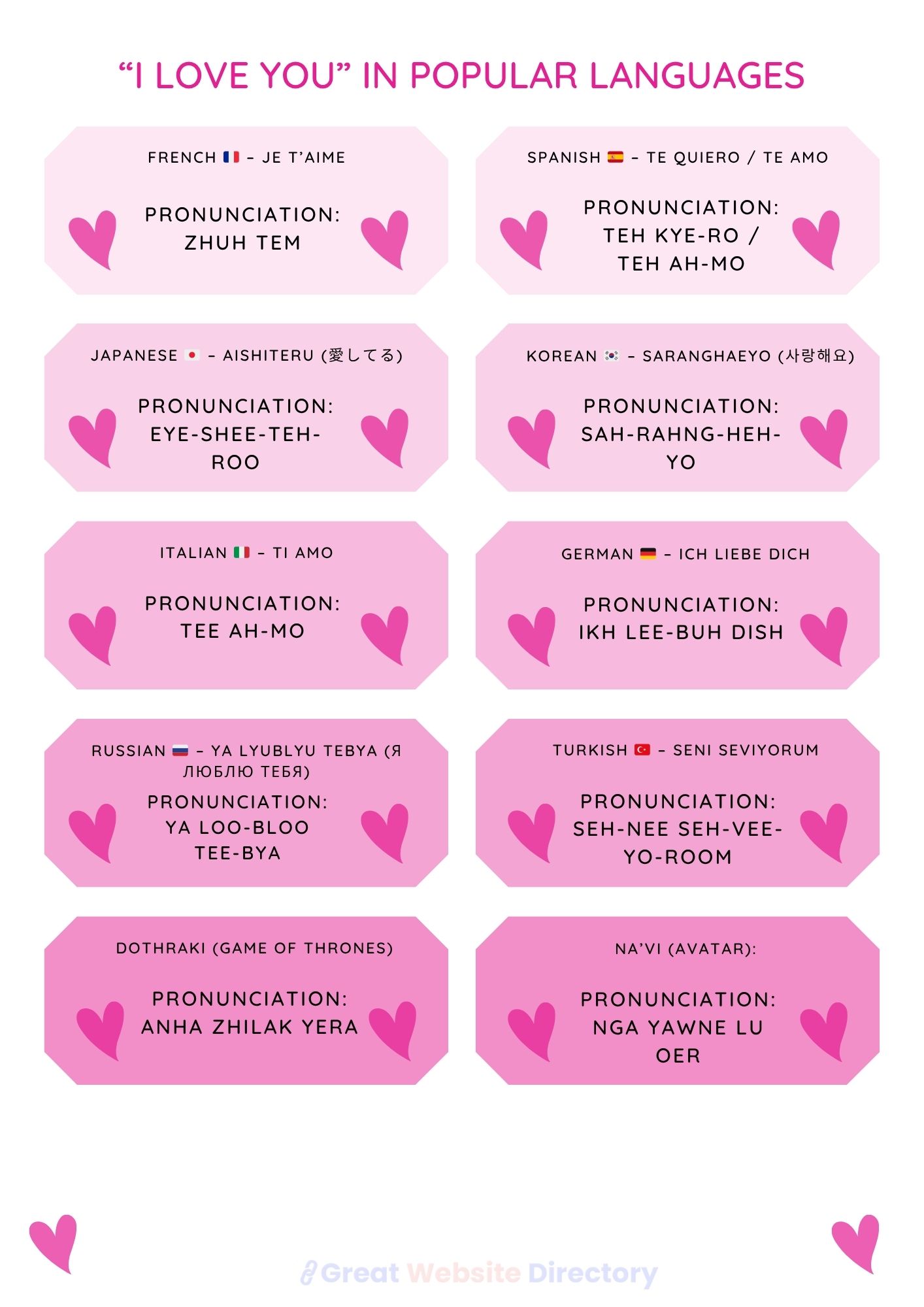
French – Je t’aime
Pronunciation: zhuh tem
Context: Romantic and timeless. In French culture, love is soft-spoken but deep. For friends, people often say “Je t’adore.”
Spanish – Te quiero / Te amo
Pronunciation: teh kye-ro / teh ah-mo
Context: Te quiero is casual and affectionate, while Te amo is serious, something you’d say to your soulmate.
Italian – Ti amo
Pronunciation: tee ah-mo
Context: Reserved for romantic partners. For friends or family, Italians say Ti voglio bene.
Hindi – Main tumse pyaar karta/karti hoon
Pronunciation: meh tum-say pyaar kar-ta (m) / kar-ti (f) hoon
Context: Classic Bollywood-style romantic declaration. Dramatic, passionate, full of feeling.
Japanese – Aishiteru (愛してる)
Pronunciation: eye-shee-teh-roo
Context: Rarely spoken aloud. In Japan, love is often expressed through care, dedication, and quiet presence.
Korean – Saranghaeyo (사랑해요)
Pronunciation: sah-rahng-heh-yo
Context: Polite and warm. Couples often use the casual Saranghae when the love feels close and familiar.
German – Ich liebe dich
Pronunciation: ikh lee-buh dish
Context: Deep and serious. Germans often reserve this for real commitment — not casual dating.
Arabic (Modern Standard) – Uhibbuka / Uhibbuki (أحبك)
Pronunciation: oo-heb-booka / oo-heb-bookee
Context: Arabic has many dialects, but this phrase always carries a strong sense of devotion and sincerity.
Russian – Ya lyublyu tebya (Я люблю тебя)
Pronunciation: ya loo-bloo tee-bya
Context: Romantic and heartfelt. For deeper admiration, Russians might say Ya tebya obozhayu (I adore you).
Turkish – Seni seviyorum
Pronunciation: seh-nee seh-vee-yo-room
Context: Warm, direct, and deeply affectionate — often used for both lovers and family.
Romantic Words Across Continents
Portuguese – Eu amo você / Amo-te
Pronunciation: eh-oo amo vo-say (Brazil) / ah-mo teh (Portugal)
Context: Expressive and musical. In Brazil, love is lively; in Portugal, it’s soft and poetic.
Greek – Σε αγαπώ (Se agapo)
Pronunciation: seh ah-ga-po
Context: Romantic and heartfelt, often said with eye contact and warmth.
Dutch – Ik hou van jou
Pronunciation: ik how fan yow
Context: Simple, sincere, and often followed by a smile or hug.
Polish – Kocham cię
Pronunciation: ko-ham chyeh
Context: Reserved for deep romantic connections — something that’s meant, not tossed around.
Swedish – Jag älskar dig
Pronunciation: yah el-skar day
Context: Open and sweet — used between lovers and family.
Finnish – Minä rakastan sinua
Pronunciation: mee-nah rah-kas-tan see-noo-ah
Context: Finns don’t say it lightly. If you hear this, it’s real.
Tagalog (Filipino) – Mahal kita
Pronunciation: ma-hal kee-ta
Context: Used for romantic or familial love; honest and heartfelt.
Hebrew – אני אוהב אותך / אני אוהבת אותך
Pronunciation: ani ohev otach (m→f) / ani ohevet otcha (f→m)
Context: Deep, intimate, and full of promise.
Persian (Farsi) – دوستت دارم (Dooset daram)
Pronunciation: doos-tet dar-am
Context: Elegant and timeless; love has always been poetic in Persian culture.
Swahili – Nakupenda
Pronunciation: nah-koo-pen-dah
Context: Joyful and melodic; love as something to celebrate.
Zulu – Ngiyakuthanda
Pronunciation: ngee-ya-koo-than-da
Context: Passionate and powerful; often sung or recited.
Amharic (Ethiopia) – እወድሃለሁ (Ewedihalehu)
Pronunciation: eh-weh-dee-ha-leh-hoo
Context: Sacred, enduring, and sincere.
Romanian – Te iubesc
Pronunciation: teh yoo-besk
Context: Romantic and dramatic — love straight out of a storybook.
Across Oceans and Islands
Hawaiian – Aloha wau ia ‘oe
Pronunciation: ah-loh-ha vow ee-ah oh-ay
Context: Aloha conveys love, compassion, and presence.
Māori – Aroha ahau ki a koe
Pronunciation: ah-ro-ha ah-how kee ah koy
Context: Emotional and spiritual connection; love as unity.
Samoan – Ou te alofa ia te oe
Pronunciation: oh-oo teh ah-loh-fah ee-ah teh oh-eh
Context: Warm and communal, often said with a smile that carries meaning.
Fijian – Au domoni iko
Pronunciation: ow doh-moh-nee ee-ko
Context: Simple and genuine; love that feels like home.
The Heartbeat of Africa
Malagasy – Tiako ianao
Pronunciation: tee-ah-koo ee-ah-noo
Context: Gentle, poetic; love that feels safe.
Yoruba – Mo nifẹ rẹ
Pronunciation: moh nee-feh reh
Context: Spiritual, fated love; also used for family.
Igbo – A hụrụ m gị n’anya
Pronunciation: ah hoo-roo m ghee n ahn-yah
Context: Honest, warm, communal love.
Somali – Waan ku jeclahay
Pronunciation: wahn koo jeck-lah-hay
Context: Expressive, poetic, musical.
Shona – Ndinokuda
Pronunciation: ndee-noh-koo-dah
Context: Soulful, lasting affection.
Luganda – Nkwagala
Pronunciation: nkoo-wah-gah-lah
Context: Everyday love for friends, family, and partners.
Indigenous and Ancient Languages of the Americas
Quechua – Kuyayki
Pronunciation: koo-yai-kee
Context: Sacred, connected to earth and spirit.
Navajo – Ayóó anííníshní
Pronunciation: eye-oh ah-nee-een-ish-nee
Context: Spiritual, holistic love.
Cherokee – Gvgeyu
Pronunciation: guh-geh-yoo
Context: Warm, enduring, often familial.
Nahuatl – Nimitztlazohtla
Pronunciation: nee-meets-tlah-soht-lah
Context: Ancient, ceremonial, poetic love.
Central and South Asia
Georgian – Mikvarhar
Pronunciation: meek-var-har
Context: Musical, heartfelt, expressive.
Armenian – Yes sirum yem
Pronunciation: yess see-room yemm
Context: Gentle, family-oriented, enduring.
Kurdish – Ez hej te dikim
Pronunciation: ez hej teh dee-keem
Context: Protective, committed, loyal love.
Pashto – Za ta sara meena laram
Pronunciation: zah tah sah-rah mee-nah lah-ram
Context: Intense, honorable, deep commitment.
Love Beyond Words
Sometimes, love is not in the phrase itself, but in the way someone listens, remembers your quirks, and stands beside you when life gets messy.
Whether it’s Je t’aime, Saranghaeyo, Nakupenda, or Mahal kita, the words change, but the feeling remains.
Whisper one of these tonight. Say it in a new language. Let your love sound different, soft, and beautiful. Because in the end, love isn’t about translation — it’s about connection.
Comparison Table: “I Love You” in 30+ Languages
<!-- Responsive Love Phrases Table -->| Language (Region) | Phrase | Pronunciation | Meaning / Context |
|---|---|---|---|
| French | Je t’aime | zhuh tem | Romantic and timeless; for friends: Je t’adore. |
| Spanish | Te quiero / Te amo | teh kye-ro / teh ah-mo | Casual vs deep romantic love. |
| Italian | Ti amo | tee ah-mo | Romantic only; family/friends = Ti voglio bene. |
| Hindi | Main tumse pyaar karta/karti hoon | meh tum-say pyaar kar-ta/kar-ti hoon | Dramatic, passionate, heartfelt. |
| Japanese | Aishiteru (愛してる) | eye-shee-teh-roo | Rarely spoken aloud; love often shown through actions. |
| Korean | Saranghaeyo (사랑해요) | sah-rahng-heh-yo | Polite; casual Saranghae for couples. |
| German | Ich liebe dich | ikh lee-buh dish | Deep, formal, emotional love; casual = Ich hab’ dich lieb. |
| Arabic | Uhibbuka / Uhibbuki (أحبك) | oo-heb-booka / oo-heb-bookee | Formal love; varies by dialect but always heartfelt. |
| Russian | Ya lyublyu tebya (Я люблю тебя) | ya loo-bloo tee-bya | Romantic; casual = Ya tebya obozhayu (I adore you). |
| Turkish | Seni seviyorum | seh-nee seh-vee-yo-room | Warm, direct, romantic and family usage. |
| Portuguese (Brazil) | Eu amo você | eh-oo amo vo-say | Expressive, romantic, often used openly. |
| Portuguese (Europe) | Amo-te | ah-mo teh | Elegant, poetic, intimate usage. |
| Dutch | Ik hou van jou | ik how fan yow | Sincere; used for family, friends, lovers. |
| Greek | Σε αγαπώ (Se agapo) | seh ah-ga-po | Romantic, heartfelt, with eye contact. |
| Polish | Kocham cię | ko-ham chyeh | Reserved for romantic declarations. |
| Swedish | Jag älskar dig | yah el-skar day | Sweet, open, used with lovers and family. |
| Finnish | Minä rakastan sinua | mee-nah rah-kas-tan see-noo-ah | Spoken when feelings are serious. |
| Tagalog | Mahal kita | ma-hal kee-ta | Romantic/familial love; honest and heartfelt. |
| Hebrew | אני אוהב אותך / אני אוהבת אותך | ani ohev otach / ani ohevet otcha | Deep, intimate, full of promise. |
| Persian (Farsi) | دوستت دارم (Dooset daram) | doos-tet dar-am | Elegant, timeless, poetic. |
| Swahili | Nakupenda | nah-koo-pen-dah | Joyful, melodic; love to celebrate. |
| Zulu | Ngiyakuthanda | ngee-ya-koo-than-da | Passionate, often sung or recited. |
| Amharic (Ethiopia) | እወድሃለሁ (Ewedihalehu) | eh-weh-dee-ha-leh-hoo | Sacred, enduring, sincere. |
| Hawaiian | Aloha wau ia ‘oe | ah-loh-ha vow ee-ah oh-ay | Love, compassion, and presence. |
| Māori | Aroha ahau ki a koe | ah-ro-ha ah-how kee ah koy | Emotional and spiritual connection. |
| Samoan | Ou te alofa ia te oe | oh-oo teh ah-loh-fah ee-ah teh oh-eh | Warm, communal, nurturing. |
| Fijian | Au domoni iko | ow doh-moh-nee ee-ko | Direct, genuine, love like home. |
| Malagasy | Tiako ianao | tee-ah-koo ee-ah-noo | Gentle, poetic, safe. |
| Yoruba | Mo nifẹ rẹ | moh nee-feh reh | Spiritual, fated love; family. |
| Igbo | A hụrụ m gị n’anya | ah hoo-roo m ghee n ahn-yah | Honest, warm, communal love. |
| Somali | Waan ku jeclahay | wahn koo jeck-lah-hay | Expressive, poetic, musical. |
| Shona | Ndinokuda | ndee-noh-koo-dah | Soulful, lasting affection. |
| Luganda | Nkwagala | nkoo-wah-gah-lah | Everyday love for friends, family, partners. |
| Quechua | Kuyayki | koo-yai-kee | Sacred, connected to earth and spirit. |
| Navajo | Ayóó anííníshní | eye-oh ah-nee-een-ish-nee | Spiritual, holistic love. |
| Cherokee | Gvgeyu | guh-geh-yoo | Warm, enduring, familial. |
| Nahuatl | Nimitztlazohtla | nee-meets-tlah-soht-lah | Ancient, ceremonial, poetic. |
| Georgian | Mikvarhar | meek-var-har | Musical, heartfelt, expressive. |
| Armenian | Yes sirum yem | yess see-room yemm | Gentle, family-oriented, enduring. |
| Kurdish | Ez hej te dikim | ez hej teh dee-keem | Protective, committed, loyal love. |
| Pashto | Za ta sara meena laram | zah tah sah-rah mee-nah lah-ram | Intense, honorable, deep commitment. |
Romantic Alternatives to “I Love You” ❤️
English: You mean the world to me.
Spanish: Eres mi vida. (You are my life)
French: Tu es l’amour de ma vie. (You are the love of my life)
Hindi: Tum meri zindagi ho. (You are my life)
Why Learn “I Love You” in Different Languages?
Global connection: Show respect and affection in your partner’s native tongue.
Romantic surprise: Add charm to your anniversary, proposal, or Valentine’s Day note.
Cultural appreciation: Every culture has a unique way of expressing love, and some even use multiple variations depending on the relationship.
FAQs
1. What is the most romantic language to say “I love you”?
French and Italian are widely considered the most romantic languages.
2. How do you say “I love you” in 100 languages?
This guide lists 20+, but for 100, check extended lists from language dictionaries.
3. What’s the difference between “Te quiero” and “Te amo” in Spanish?
Te quiero = casual love. Te amo = deep romantic love.
4. Which cultures avoid saying “I love you” directly?
Japanese and Korean cultures often express love through actions, not just words.
5. Can I say “I love you” to friends in other languages?
Yes—many cultures have different versions for romantic vs platonic love.
Final Thoughts
Love knows no boundaries, and neither do languages. Whether you whisper "Je t’aime" under the lights of Paris, say "Saranghaeyo" in the heart of Seoul, or write (Main tumse pyaar karta hoon) in Hindi, the true magic lies in speaking from the heart.
Surprise your partner, delight a friend, or charm someone special with words that cross borders, cultures, and even worlds, because love sounds beautiful in every language.